Workforce-First Beauty Education as Public Infrastructure: A Policy Brief for Kentucky and the Nation
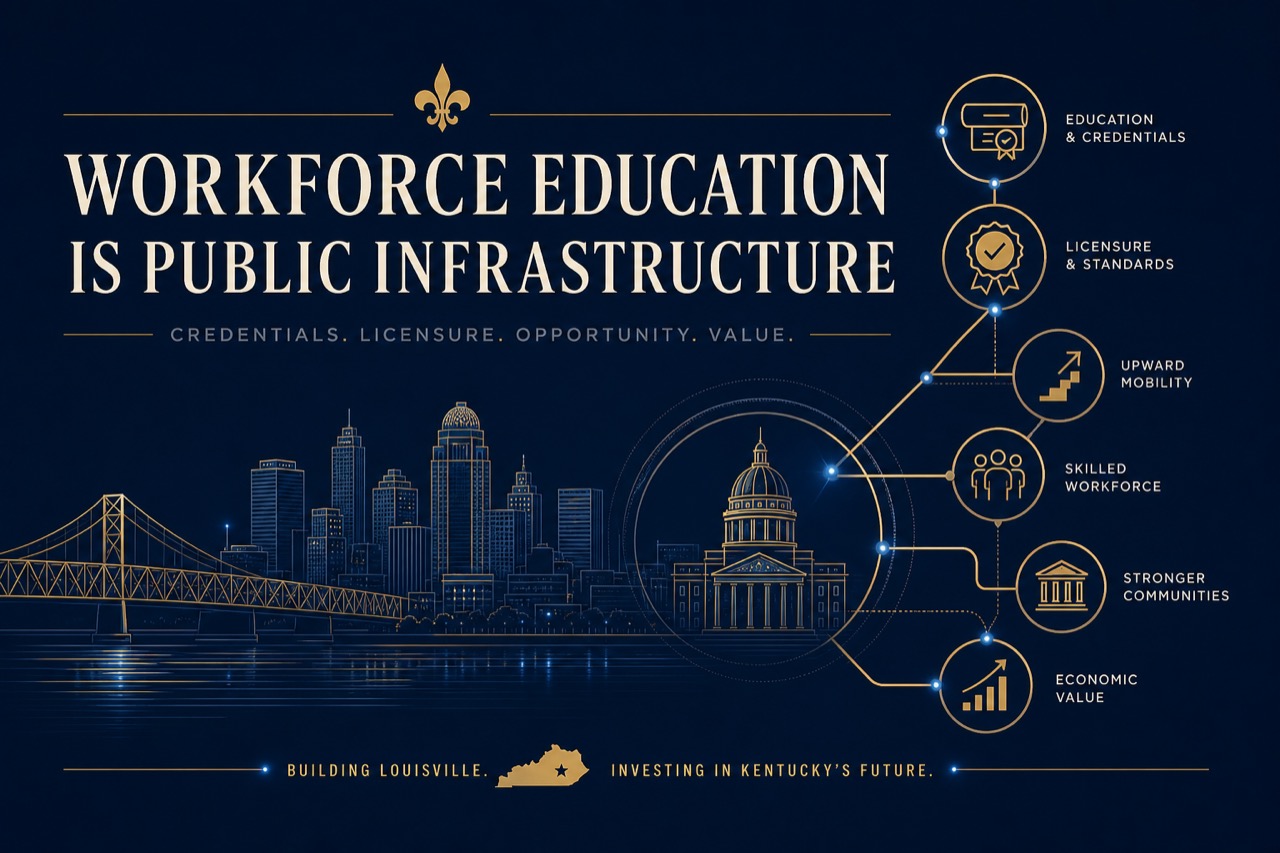
Beauty education is often discussed too narrowly: as a private consumer choice, a specialized training niche, or a marginal occupational track. That framing misses its true public significance. When properly regulated and competently delivered, beauty education functions as workforce infrastructure. It prepares licensed professionals, supports entrepreneurship, expands local service capacity, and creates lawful pathways into income-producing participation for populations that many traditional systems underserve.
This is not rhetorical elevation. It is policy realism.
The Department of Labor’s apprenticeship framework recognizes that strong workforce pathways combine structured learning with job-relevant preparation and can help employers recruit, build, and retain a skilled workforce. The broader federal education landscape similarly continues to acknowledge the importance of career and technical pathways. Within that logic, the beauty sector should no longer be treated as peripheral. It is a regulated services field tied to public health, personal care, small-business formation, and community-level economic circulation.
Kentucky is well positioned to demonstrate this point. The Kentucky Board of Cosmetology’s statutory and regulatory mission speaks directly to education, health, and professional standards. A state that can combine lawful oversight with scalable educational access is not simply administering a trade. It is strengthening a workforce pipeline.
Three policy conclusions follow.
First, affordability in regulated workforce education should be treated as a public-interest concern. When the cost of lawful entry into a profession becomes unnecessarily high, the state does not merely burden individual students. It constrains labor supply, delays mobility, and increases pressure toward informal or suboptimal economic pathways.
Second, access and standards should not be framed as opposites. Public protection remains essential. But standards serve the public best when they are rigorous, legible, and reachable by qualified learners.
Third, beauty-sector workforce pathways deserve more serious treatment in state and regional development strategy. Licensed personal-care work is connected to small-business activity, neighborhood commerce, women’s economic participation, immigrant entrepreneurship, and practical career entry for nontraditional learners.
A workforce-first policy framework would therefore encourage a different style of institutional design and public investment. It would emphasize program clarity, licensure readiness, multilingual accessibility where lawful, employer relevance, and funding models that reward real completion and workforce entry rather than ornamental scale. It would also understand schools and training institutions as part of a broader economic ecosystem rather than isolated educational vendors.
For Kentucky, the opportunity is larger than one sector. If the Commonwealth can demonstrate how regulated workforce education can be made more affordable, more efficient, and more aligned with real labor-market mobility, that model can influence other domains of career education as well. The beauty field becomes a proving ground.
This is where public policy should become more disciplined. Not every educational program warrants grand strategic attention. But sectors that combine licensure, consumer demand, small-business formation, and relatively fast pathways into work deserve more analysis than they usually receive. Beauty education meets that threshold.
The nation is entering a period in which practical mobility systems will matter more than ever. Communities need institutions that can move people into lawful productivity with less friction and more dignity. States need models that protect the public while supporting growth. Funders and civic actors need examples of workforce infrastructure that are visible, local, and replicable.
Beauty education, properly understood, is one of those examples. Public policy should start treating it that way.
Research & Information Disclaimer
This publication is provided for educational, research, and public-information purposes only. It reflects institutional analysis based on publicly available information, practical experience, and internal interpretation as of the publication date. It does not constitute legal advice, tax advice, investment advice, or a guarantee of regulatory, financial, or operational outcomes. Readers should consult qualified legal, financial, regulatory, or other professional advisors before acting on matters discussed herein.
References
- U.S. Department of Labor — Apprenticeship: https://www.dol.gov/general/topic/training/apprenticeship
- U.S. Department of Labor — Workforce Development Solutions: https://www.dol.gov/agencies/eta/employers/workforce-development-solutions
- Kentucky Board of Cosmetology: https://kbc.ky.gov/Pages/index.aspx
- NCES — Career and Technical Education Statistics: https://nces.ed.gov/surveys/ctes/