Why The Lost Majority Matters to Small Business Owners, Immigrant Families, and Community Builders
Every serious small business owner knows a truth that public language often avoids: survival is not mainly about talking well. It is about keeping going.
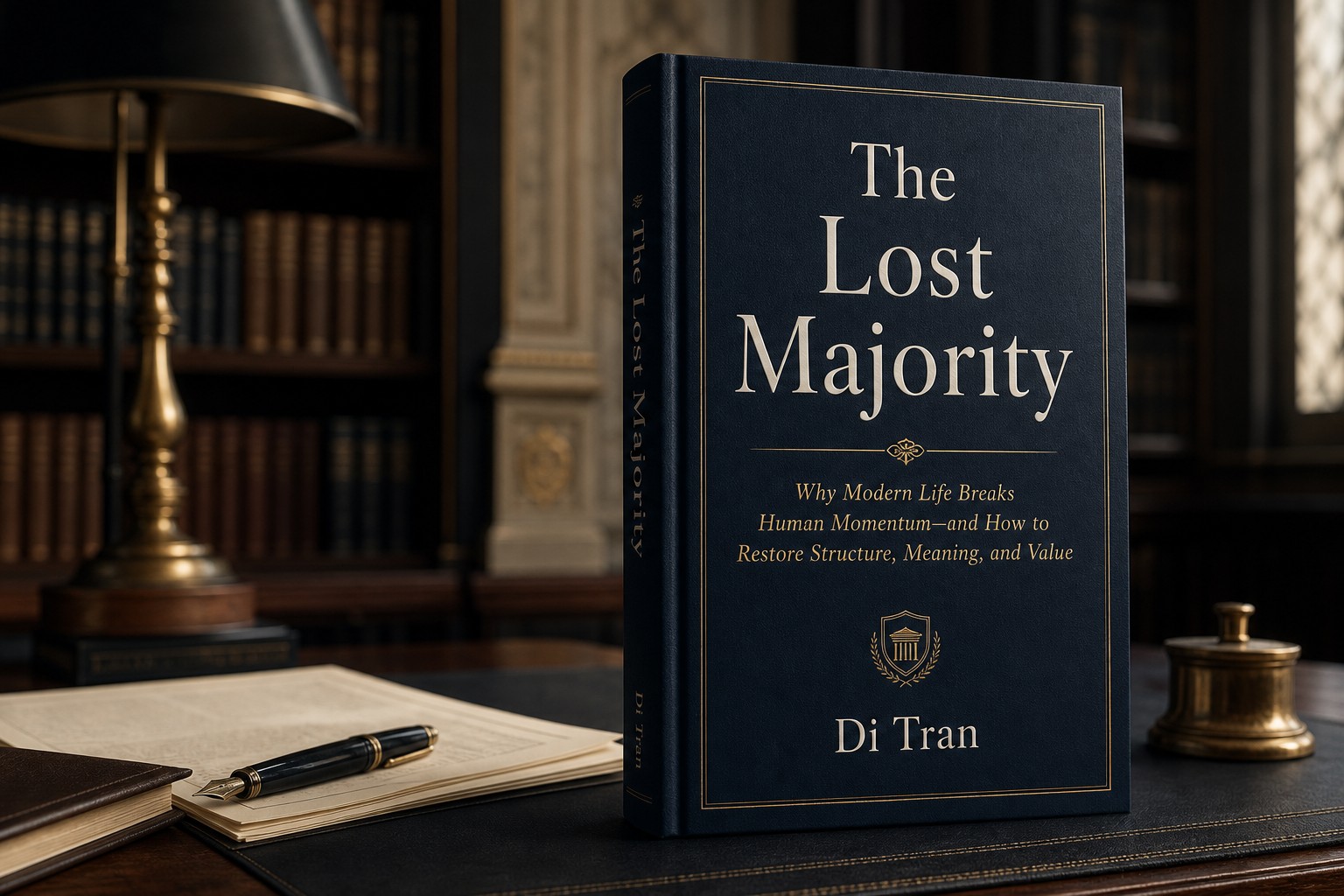
That is one reason Di Tran’s new book, The Lost Majority: Why Modern Life Breaks Human Momentum—and How to Restore Structure, Meaning, and Value, matters beyond the world of publishing. It speaks directly to the lived reality of immigrant families, local builders, disciplined entrepreneurs, and community institutions that must create value even when society rewards noise more than steadiness.
Why this book belongs in an advocacy conversation
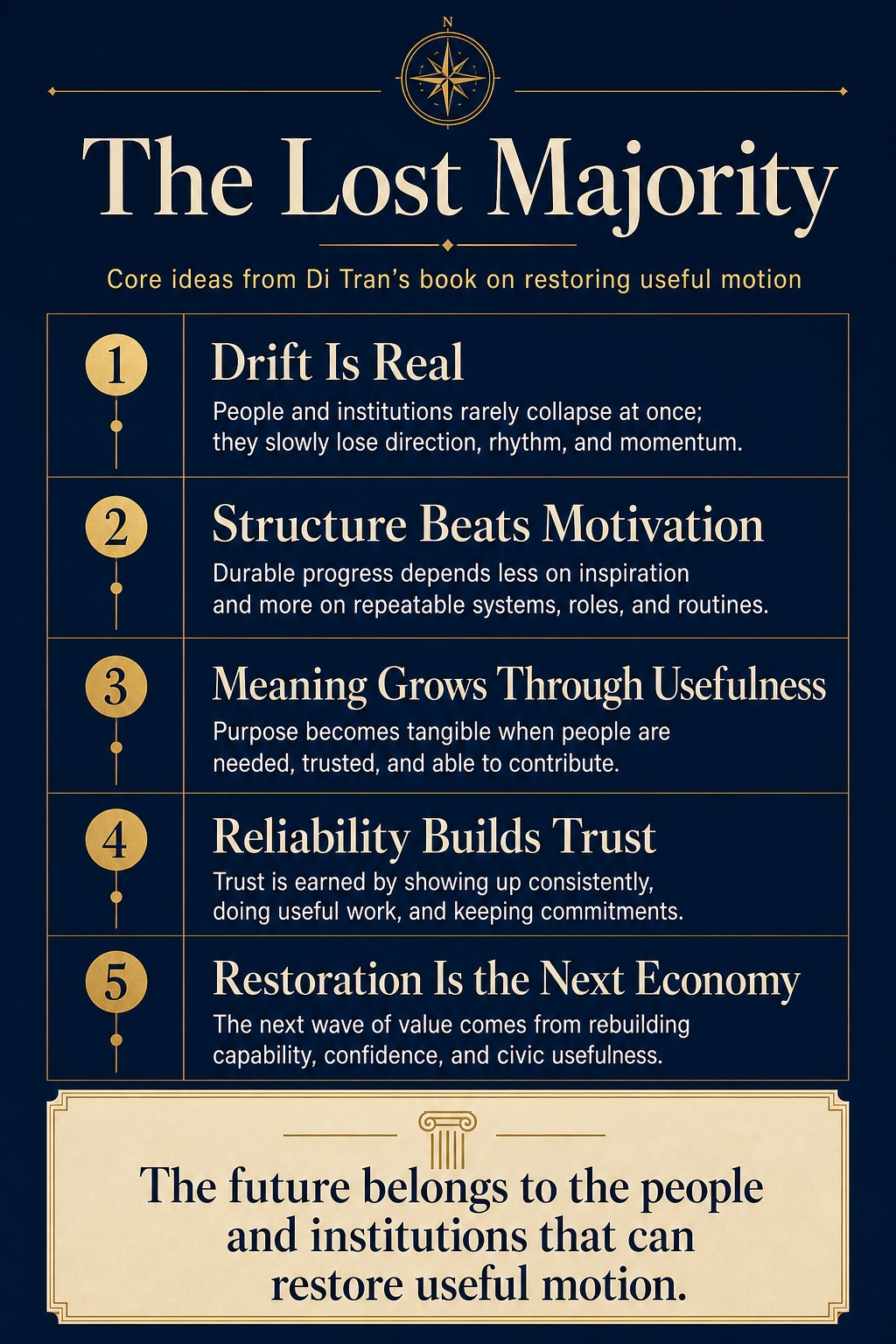
At the center of the book is a powerful claim: many people are not losing because they are empty of talent or ambition, but because modern systems are damaging continuity itself. When rhythm breaks, when proof disappears, when effort no longer converts cleanly into visible progress, drift takes over.
For small business owners, this is not abstract. It appears in payroll, staffing, attendance, customer trust, follow-up, family pressure, cash discipline, and the daily burden of remaining reliable while the broader culture becomes less so.
Small business is community infrastructure
NABA has consistently argued that immigrant-owned and family-built businesses are not minor side stories. They are community infrastructure. They create jobs, routines, services, trust networks, and living examples of disciplined value creation.
The Lost Majority gives language to that truth. It explains why reliability, proof of work, and disciplined usefulness are not old-fashioned habits. They are the architecture of trust.
- Families need continuity to remain strong.
- Businesses need systems to remain credible.
- Communities need builders who can be counted on.
- Young people need examples that show effort becoming real value.
Why Louisville and America should care
If America wants stronger neighborhoods, stronger workforce participation, and stronger multi-generational opportunity, it should pay closer attention to the people and institutions that reduce disorder rather than merely comment on it. That is why this book deserves attention from founders, association leaders, educators, and policymakers alike.
Where to Read, Watch, and Follow
- Buy The Lost Majority on Amazon
- Watch the companion YouTube video: The Lost Majority — Restoring Structure, Meaning, and Human Continuity in an Age of Drift
- Explore Di Tran University — The College of Humanization
NABA supports this release because the book strengthens a serious public case for discipline, continuity, and ethical value creation — the same qualities that help small business owners, immigrant families, and community builders keep society moving.