Small Business Is Community Infrastructure: Why Louisville Should Clap for and Support Small Business Owners
Location: 4957 Brownsboro Road, Louisville, KY 40222
Meeting-place value: strong parking, easy corner access, early-opening convenience, and a family-friendly / business-friendly layout that works for morning meetings, client conversations, and casual neighborhood gatherings.
Why the timing is strong: Prospect-side growth, the nearby VA hospital and office activity, and newly improved highway access all make this a well-positioned addition to the area.
A Di Tran / NABA Perspective
When people think about infrastructure, they usually think first about roads, bridges, utilities, construction, logistics, and public systems.
They are not wrong.
But there is another kind of infrastructure without which a city slowly weakens: the infrastructure of local trust, local ownership, neighborhood hospitality, family enterprise, and daily economic life. In practice, that means small business.
Small business is not a side conversation in a healthy city. It is part of the operating structure of community itself.
That is why a new opening like Louisville’s Paris Baguette deserves more than consumer enthusiasm. It deserves civic respect.
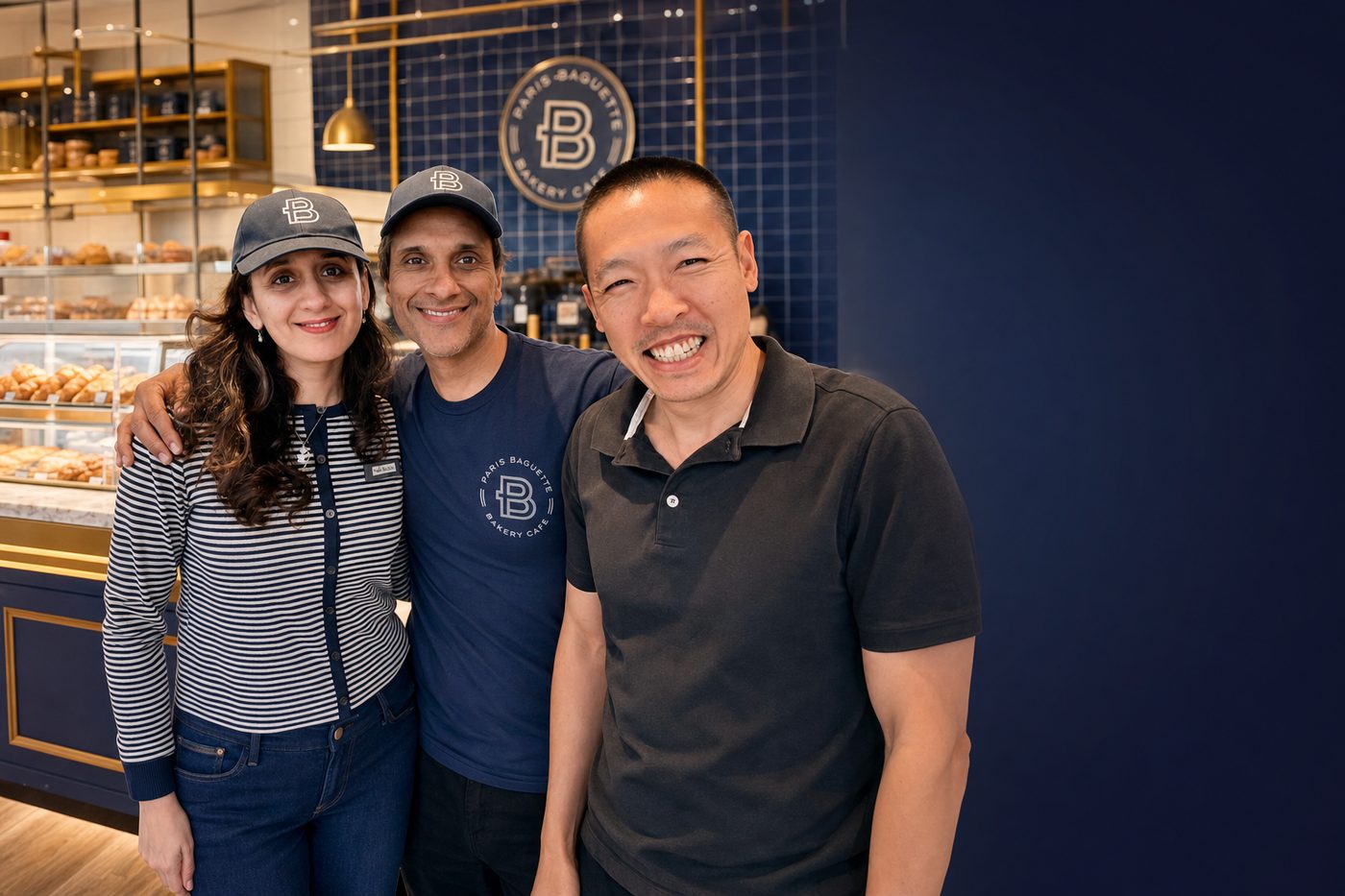
A family and its partners did not simply bring pastries to a corridor. They brought capital, labor, courage, professional discipline, relationship-building, and a willingness to serve the public in a very direct way. They helped convert a commercial address into a place of energy, welcome, and economic circulation.
That point becomes even clearer when the location is considered practically. At 4957 Brownsboro Road, this is the kind of corner where convenience matters, where parking matters, where visibility matters, where surrounding offices matter, and where the difference between a cramped stop and a truly usable space changes whether people build a habit. A strong bakery café in a corridor like this can serve families, professionals, local owners, and nearby offices at once. That is not a trivial benefit. That is neighborhood functionality.
Di Tran’s own local view is that this area deserves exactly this level of bakery and coffee experience. The Prospect / Northfield corridor has long had demand for an early-opening, family-friendly, business-usable gathering space—something more spacious and more conversation-friendly than a standard quick-stop coffee routine. With improved roadway access, a newly constructed highway pattern that better feeds the corridor, nearby Prospect-side growth, and expanding medical and office activity including the nearby VA hospital and offices, this opening is exceptionally well timed.
That is infrastructure.
When small businesses open, neighborhoods gain more than products. They gain life. They gain jobs. They gain convenience. They gain routine. They gain social warmth. They gain visible proof that a city is still capable of renewal. And when those businesses are built by immigrant families, the city gains another gift as well: a stronger version of the American promise made visible in real time.
This matters deeply to me, and it matters to the New American Business Association.
I believe immigrant-owned and family-owned small businesses should be understood as one of the most important moral and economic forces in American local life. These businesses are often built by people who know sacrifice intimately. They know what it means to study while working, to support family while adapting, to build credibility while learning a new landscape, to carry multiple responsibilities at once, and to keep going without guarantees.
That background often produces a special kind of enterprise: serious, disciplined, grateful, resilient, and deeply aware that work is not only about income. It is about dignity, responsibility, and contribution.
Louisville should want more of that.
The city should want more physicians, finance professionals, educators, immigrants, skilled workers, and disciplined families who choose not only to succeed privately, but to build publicly. It should want more business owners who create gathering spaces, hire locally, respect culture, and strengthen neighborhoods. It should want more commercial life that is both economically viable and humanly warm.
That is why this Paris Baguette story is larger than one opening.
It is a reminder that when one family builds, the city’s possibilities expand. A young person sees an example. Another family sees courage. Another entrepreneur sees a path. Another neighborhood sees movement. Another community feels included. These things are not soft outcomes. They are strategic outcomes.
At NABA, we believe the next phase of Louisville’s strength will depend in part on whether the city becomes better at noticing, connecting, and elevating this kind of enterprise. Not after success is already obvious. Early. While the builders are still building.
That is advocacy in the highest sense.
Advocacy is not only lobbying or policy language. Advocacy is also narrative. It is choosing what stories to elevate, what people to honor, and what kind of public culture to reinforce. If we consistently elevate businesses that carry discipline, hospitality, family commitment, and immigrant courage, we help create a city that attracts more of the same.
That is one reason I want NABA to continue telling stories like this one.
I also believe places like this should be intentionally used by Louisville’s business community. Nearby professionals, office teams, small-business owners, and community builders should see this not only as a place to buy coffee, but as a place to meet, connect, and strengthen local commercial relationships. When a family builds a beautiful, practical, welcoming place, the city should reward that effort with real usage. This should become one of those addresses people naturally suggest for a morning conversation, a client meeting, a neighborhood catch-up, or a quick professional reset between appointments.
There is also a product and taste lesson here. As shared by the family, this concept made a lasting impression years ago in New York because it offered something refined: bakery products that felt elegant, distinctive, and often less overwhelmingly sweet than the typical American bakery experience. That difference matters. It is part of why a brand like Paris Baguette can feel fresh in Louisville. It brings not only a name, but a style—a more Paris-leaning, European bakery sensibility that many people find balanced, memorable, and worth returning for.
Not to flatter people cheaply, but to recognize genuine contribution. Not to manufacture symbolism, but to strengthen an ecosystem. Not to chase attention, but to create alignment among small-business owners, professionals, families, and community leaders who all understand the same truth: when a family builds something beautiful and useful, the city should stand with them.
Louisville’s future will not be secured by slogans alone.
It will be secured by builders.
By disciplined families.
By immigrant entrepreneurs.
By local owners who take real risk.
By communities that learn to support them with intelligence and gratitude.
That is the direction we should move.
And that is why this moment deserves to be seen clearly.
Small business is community infrastructure.
Louisville should treat it that way.
Support the Builders
If you are a Louisville small-business owner, immigrant entrepreneur, office professional, or neighborhood family looking for a place to gather, meet, and support those who build, this is exactly the kind of business worth showing up for.
The New American Business Association believes Louisville grows stronger when small business owners clap for one another, help one another, and intentionally support the places other families work hard to build.
Discover more from New American Business Association (NABA) - Louisville, KY
Subscribe to get the latest posts sent to your email.