Reframing Beauty Licensing as Economic-Mobility Infrastructure: A Public-Interest Analysis
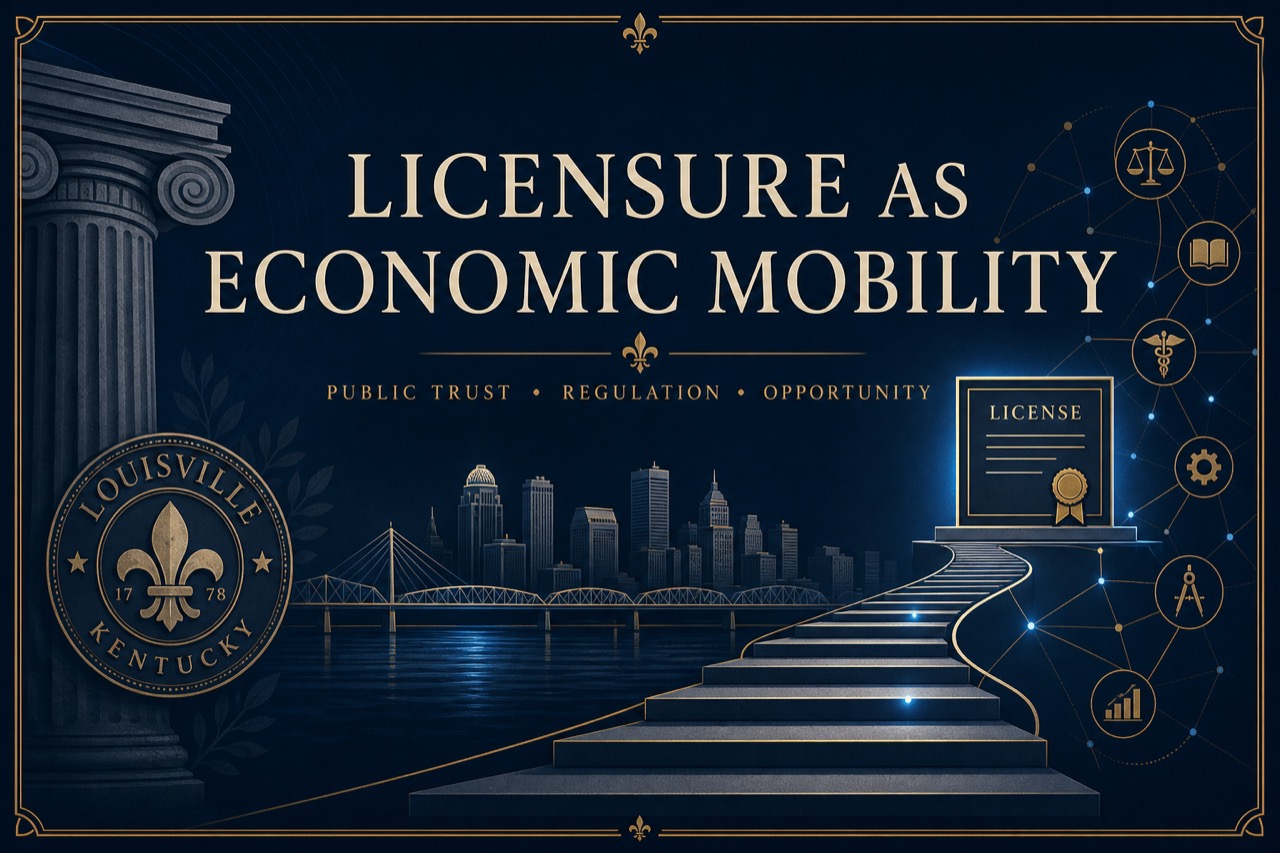
Licensing debates are often framed too crudely. One side treats licensure as mere gatekeeping. The other treats it as untouchable professional tradition. Both frames are incomplete. In reality, occupational licensing is best understood as infrastructure. When designed well, it protects the public, defines minimum professional standards, clarifies lawful entry, and converts skill into recognized economic standing. When designed poorly, it can become confusing, expensive, or unnecessarily exclusionary.
The goal should not be less seriousness. It should be more intelligent seriousness.
The beauty field offers a particularly useful case study because it depends on visible public contact, sanitation standards, technical competence, and a workforce pathway that often serves first-generation entrepreneurs, immigrants, women, and working adults. In this context, licensure is not an abstract credential. It is a legal bridge. It turns effort into legitimacy.
The U.S. Bureau of Labor Statistics makes the basic structure plain: entry into professions such as nail technology requires completion of a state-approved program and passage of a state exam. The Kentucky Board of Cosmetology likewise grounds the profession in educational, health, and regulatory standards. These features should not be viewed as obstacles to mobility. They are part of what makes mobility lawful and publicly trusted.
But here is the crucial policy insight: if licensure is infrastructure, then access to licensure must also be treated as infrastructure.
That means exam systems should be understandable. Educational pathways should be transparent. Costs should be scrutinized. Multilingual access should be improved where lawfully feasible. Students should not be forced to navigate needless ambiguity between training and testing. And institutions should be evaluated not merely on enrollment volume, but on their ability to guide students responsibly through the complete mobility chain.
This has direct implications for public-interest policy. A regulatory system that preserves standards while reducing avoidable friction can enlarge the lawful workforce, improve service quality, and strengthen entrepreneurial entry. By contrast, a system that preserves formality while tolerating confusion risks undermining its own legitimacy.
Reframing licensure as mobility infrastructure also helps correct a cultural blind spot. Practical professions are too often discussed as if they were civically minor. Yet the communities they serve rely on them constantly. They produce income, small businesses, consumer services, neighborhood vitality, and pathways of independence for thousands of families. The regulation of such fields therefore has broader economic consequence than many policymakers acknowledge.
For Kentucky and beyond, the real challenge is not whether to maintain standards. It is how to maintain them in a way that is both credible and humane. That is the mark of mature regulation. Mature regulation does not delight in procedural difficulty. It seeks public protection with administrative intelligence.
Beauty licensing, then, should be seen as part of a larger national conversation about how America builds lawful pathways into work. If the country wants more people in the formal economy, more entrepreneurship, more compliant small business formation, and more mobility for populations often overlooked by legacy institutions, it must care about what happens at the level of the license.
That is not a minor question. It is a structural one.
Research & Information Disclaimer
This publication is provided for educational, research, and public-information purposes only. It reflects institutional analysis based on publicly available information, practical experience, and internal interpretation as of the publication date. It does not constitute legal advice, tax advice, investment advice, or a guarantee of regulatory, financial, or operational outcomes. Readers should consult qualified legal, financial, regulatory, or other professional advisors before acting on matters discussed herein.
References
- Kentucky Board of Cosmetology: https://kbc.ky.gov/Pages/index.aspx
- Kentucky Board of Cosmetology — Exams: https://kbc.ky.gov/exams/Pages/default.aspx
- U.S. Bureau of Labor Statistics — Manicurists and Pedicurists: https://www.bls.gov/ooh/personal-care-and-service/manicurists-and-pedicurists.htm
- U.S. Department of Labor — Apprenticeship: https://www.dol.gov/general/topic/training/apprenticeship