Beauty Licenses, Part-Time Work, and Small-Business Reality
Strategic companion article. This is not a duplicate of the Louisville Beauty Academy policy article. This channel’s role is: small-business and workforce advocacy.
NABA positions beauty credentials as small-business infrastructure, not only employee-job preparation.
Why This Belongs in the National Conversation
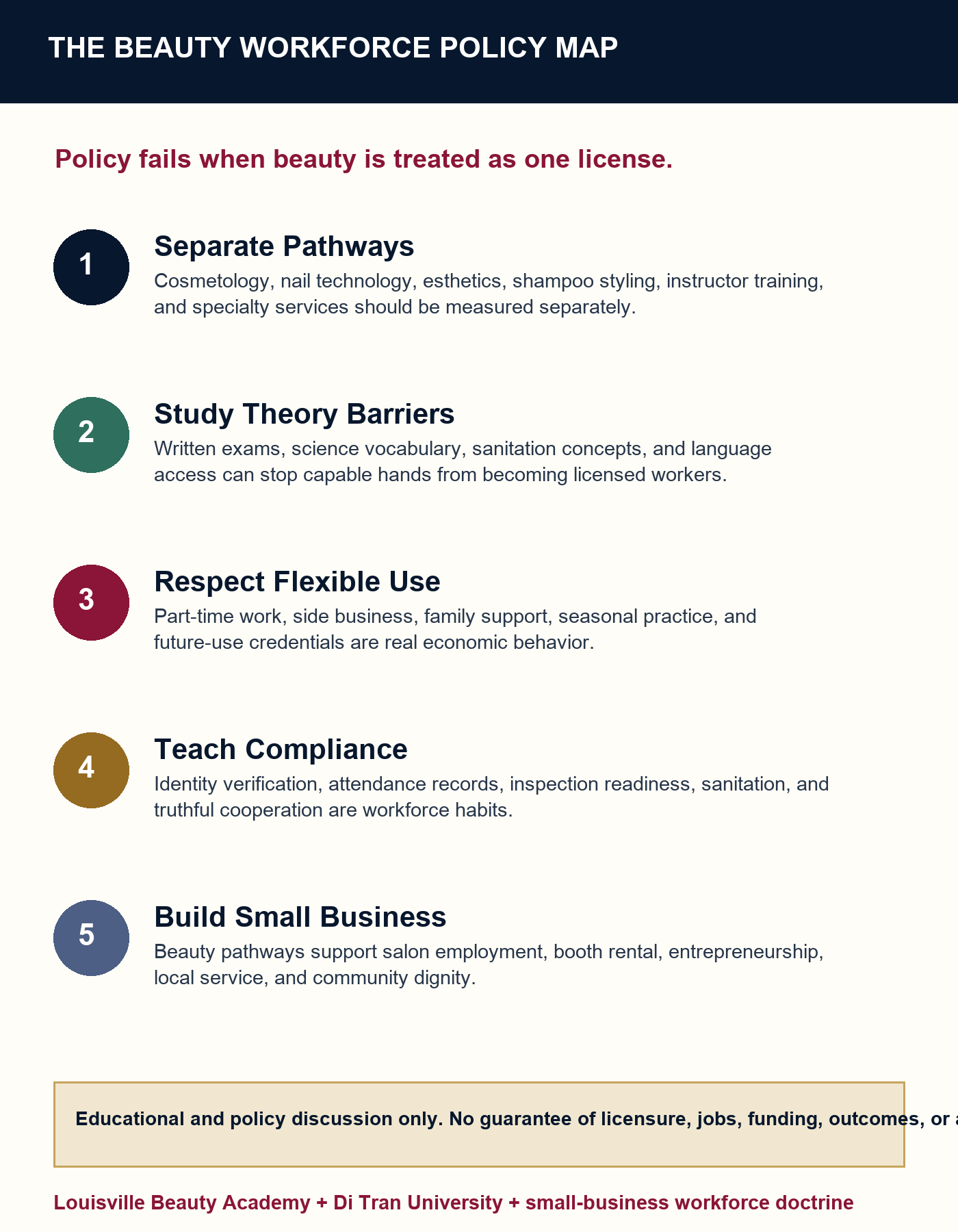
The beauty workforce is part of small-business development. It includes students who need affordable pathways, licensed professionals who may work part-time or independently, salons that need dependable talent, immigrant families building economic stability, and institutions trying to teach compliance without losing human dignity.
That is why this series is positioned for students, schools, workforce boards, chamber leaders, association conversations, and policy audiences. The message is not that standards should disappear. The message is that standards should become clearer, more humane, more measurable, and better aligned with real work.
Speaker and Policy Frame
Louisville Beauty Academy’s lived model gives Di Tran and the connected institutional system a practical base for speaking on the next trend: beauty workforce development as compliance education, AI-supported documentation, small-business mobility, and accessible professional formation.
Related Canonical Article
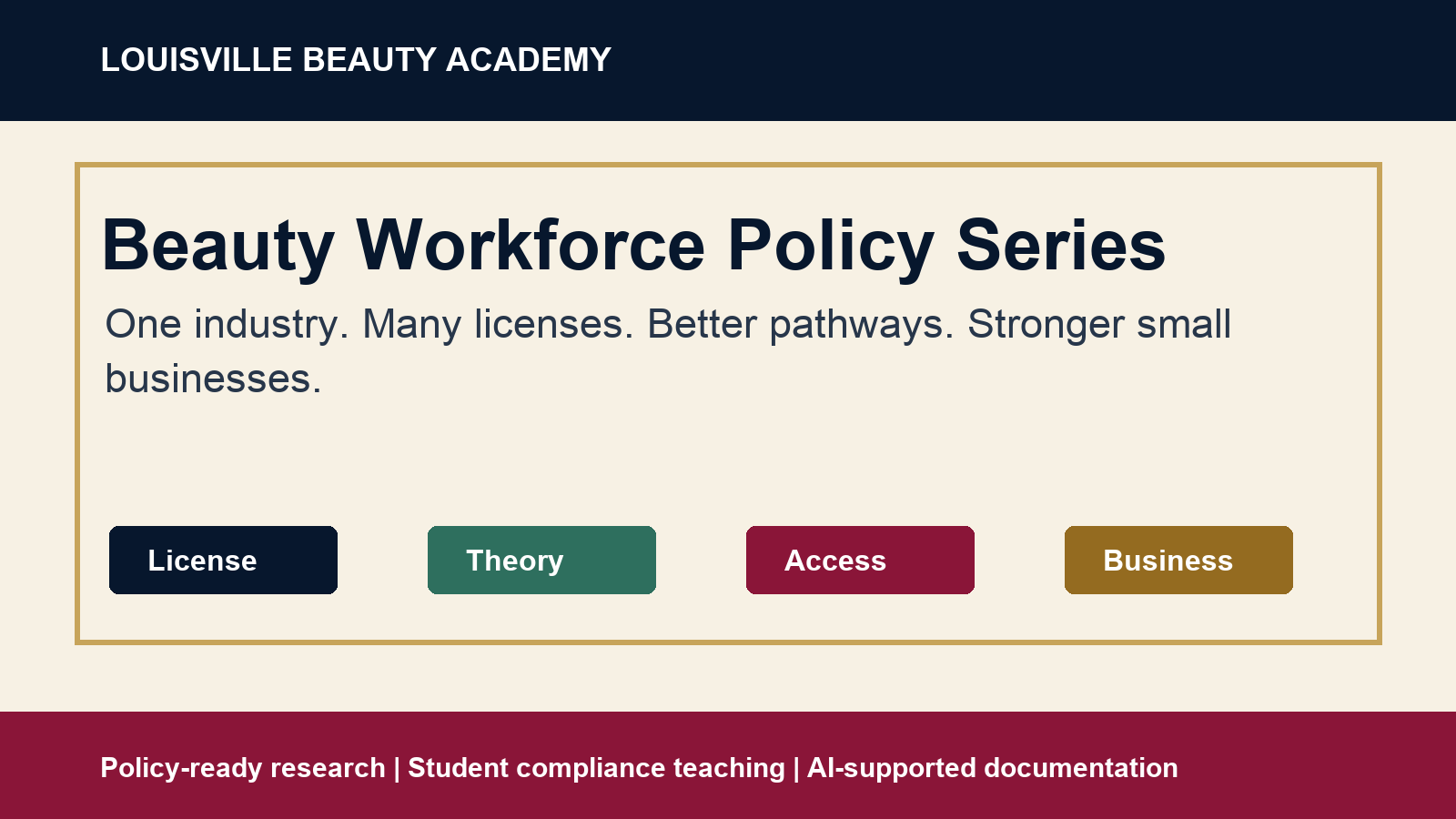
Canonical LBA article: The Beauty Workforce Is Not One License. This companion also supports the scheduled LBA policy article: From License to Livelihood: Why Beauty Graduates Use Credentials Part-Time, Seasonally, or Entrepreneurially.
Boundary
This article is educational and strategic. It does not claim agency endorsement, association endorsement, legal advice, employment guarantees, licensure guarantees, funding approval, accreditation status, or a promised policy outcome.