Renewal Systems, Public Trust, and Student Protection in Beauty Education
Renewal Systems, Public Trust, and Student Protection in Beauty Education
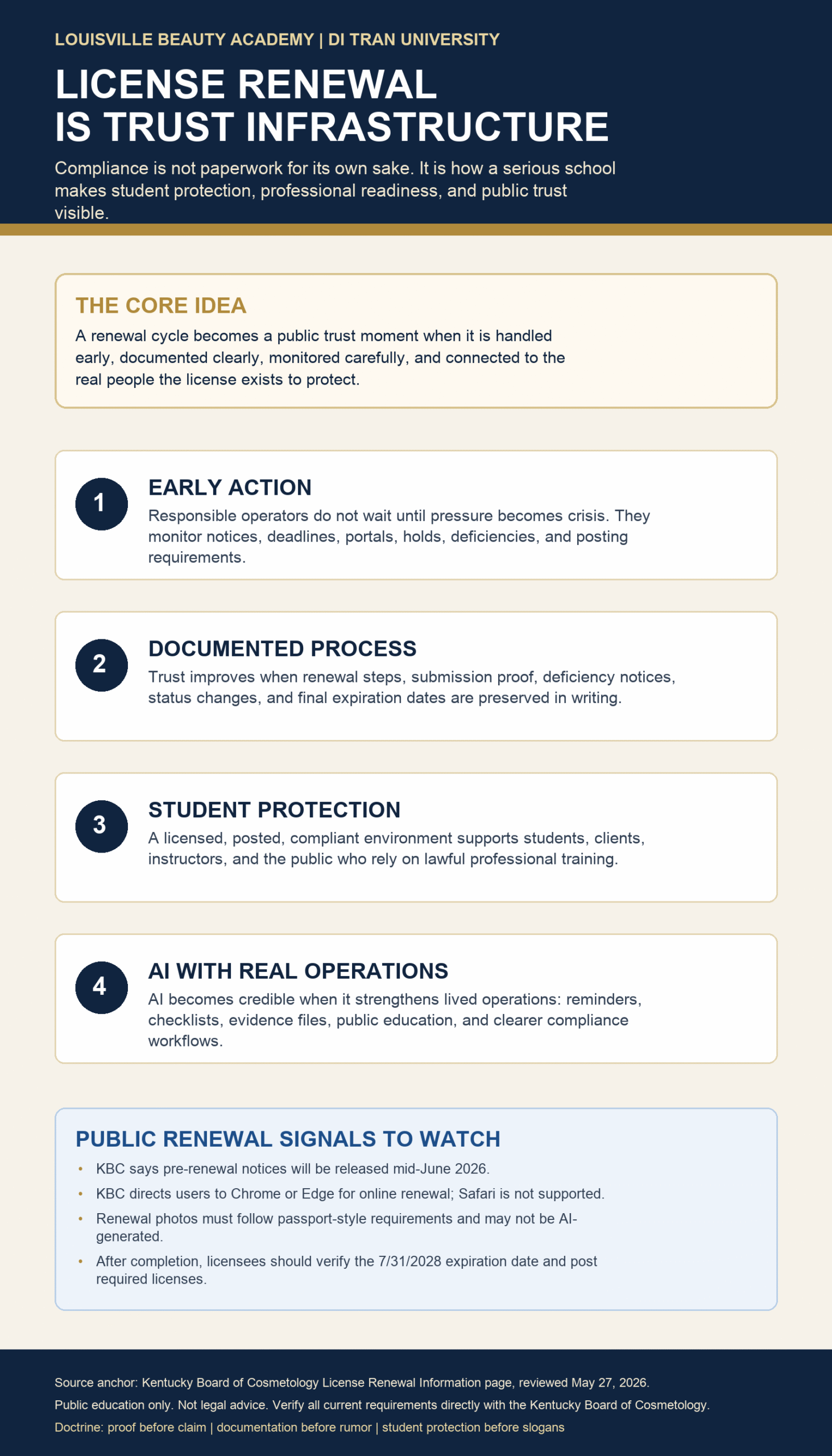
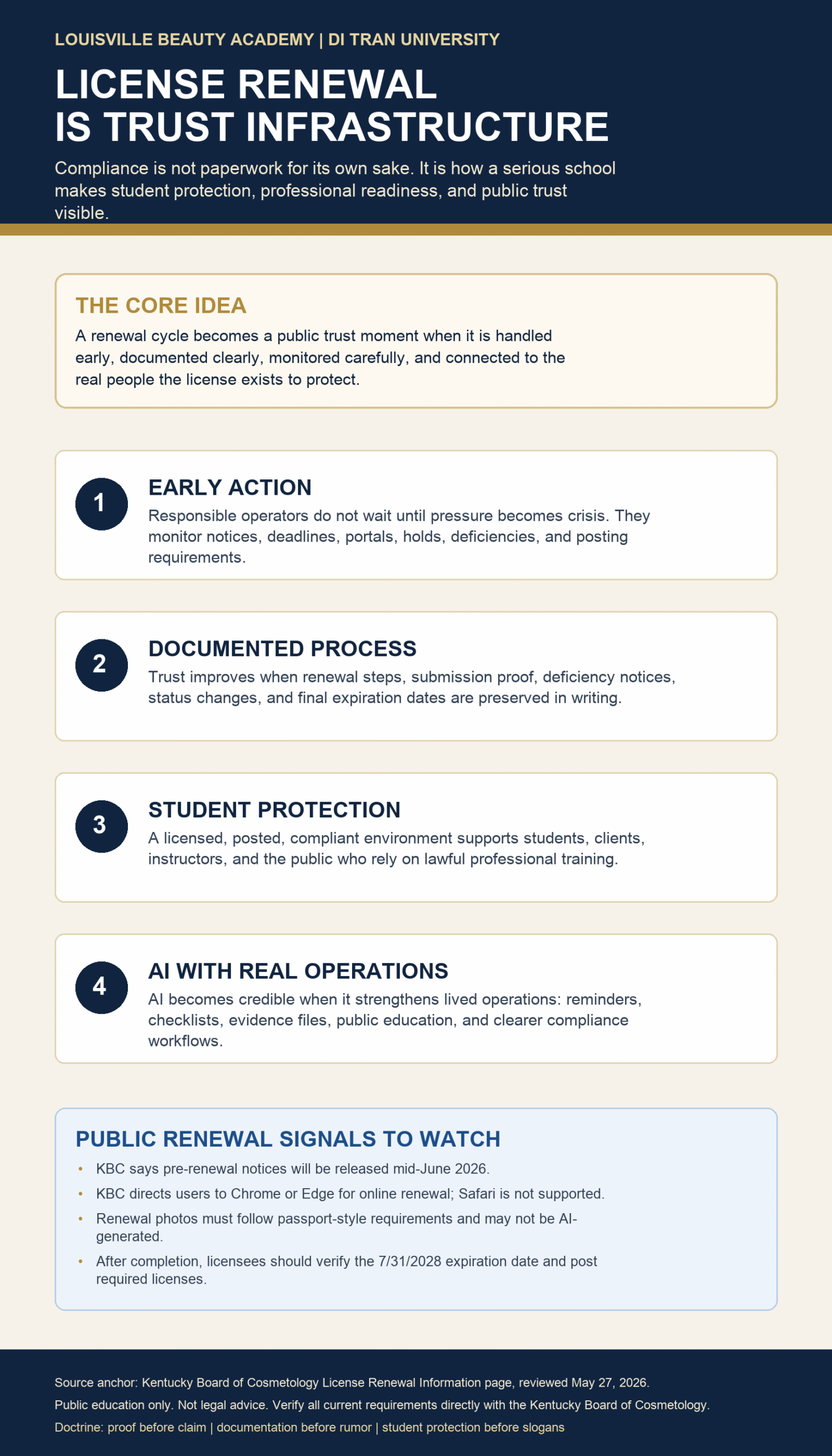
Beauty education depends on trust. Students trust that a school is operating lawfully. Clients trust that services are delivered inside a licensed environment. Regulators trust that the records and visible licenses tell the truth.
That is why renewal systems matter. They are not merely private administrative events. They are part of the public-interest infrastructure that supports lawful workforce entry.
A Public-Interest View
When renewal requirements are clear, accessible, and monitorable, they strengthen the entire system. Schools can prepare earlier. Licensees can correct deficiencies. Students and clients can see that compliance is taken seriously.
The Policy Lesson
Policy should not treat documentation as a burden detached from human outcomes. Good documentation protects people. It clarifies expectations, creates evidence, reduces confusion, and helps institutions improve without guessing.
Responsible AI Use
AI can support this public-interest work when used to improve reminders, accessibility, translation, education, and record organization. It should remain subordinate to law, human judgment, and verified sources.
Source and Boundary
This public-education post is anchored to the Kentucky Board of Cosmetology License Renewal Information page: https://kbc.ky.gov/Licensure/Pages/License-Renewal-Information.aspx. It is not legal advice. Readers should verify current requirements directly with the Kentucky Board of Cosmetology and their own professional advisors where appropriate.