Beauty School Without the Debt Trap: A Policy Question for Student Choice and Workforce Dignity
Beauty School Without the Debt Trap: A Policy Question for Student Choice and Workforce Dignity
NABA views Beauty School Without the Debt Trap as more than a book title. It is a policy question.
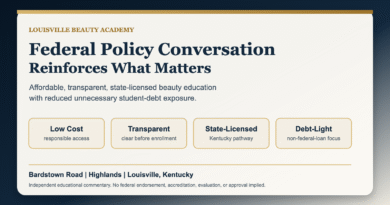
Can lower-cost, state-licensed schools that document clearly, protect students, and support licensure pathways receive more serious recognition in workforce development conversations?
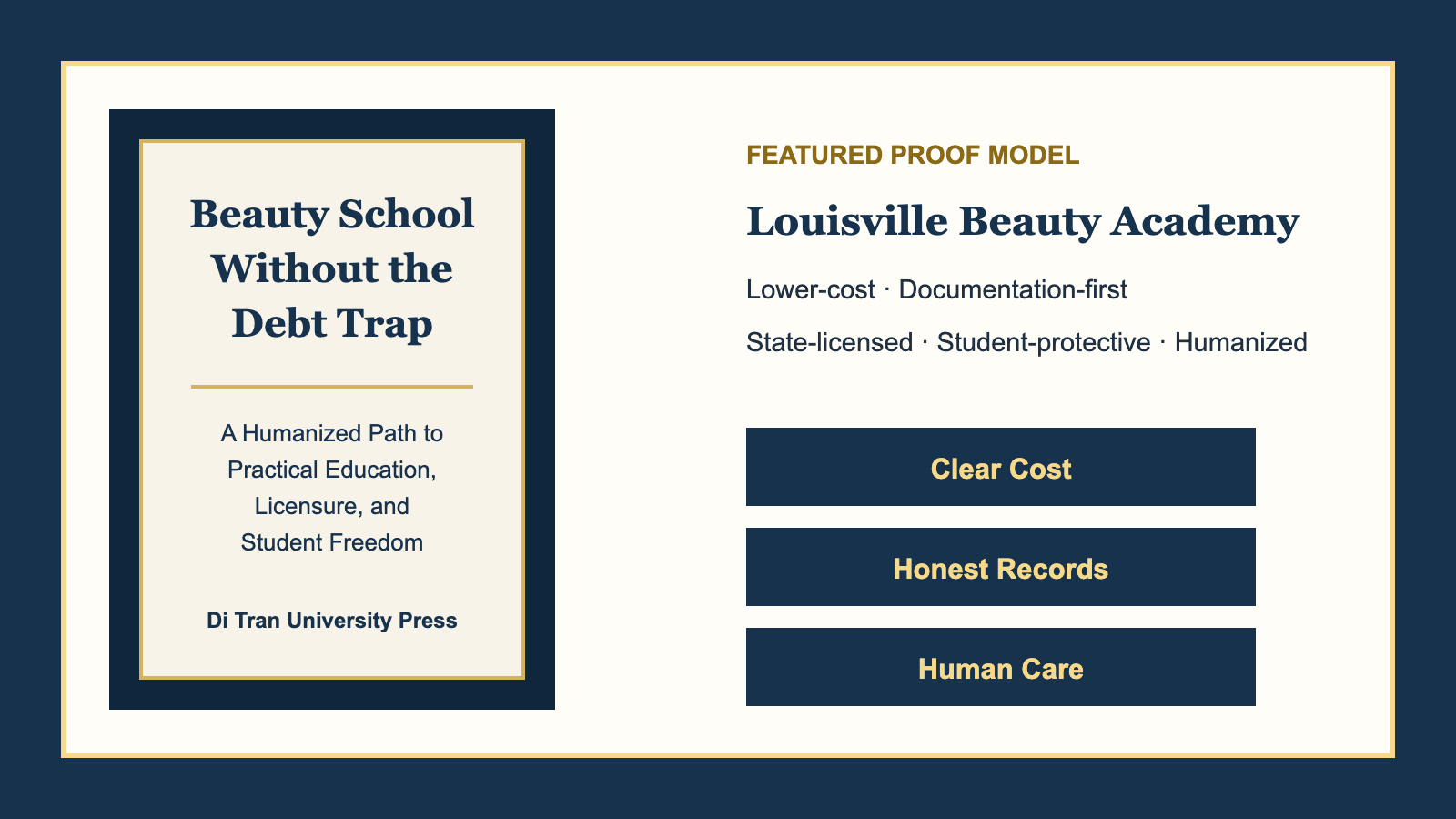
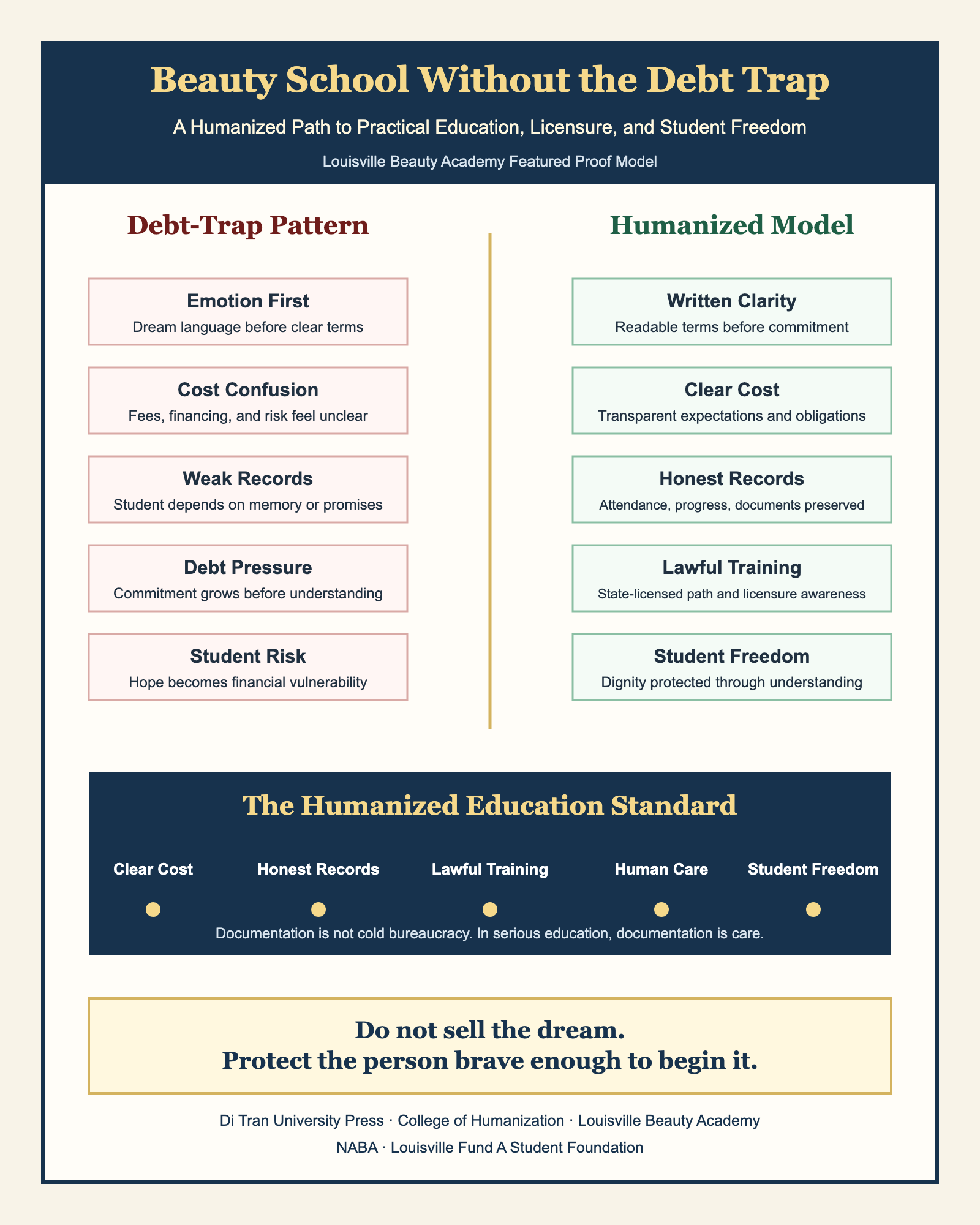
Louisville Beauty Academy is featured in the book as a practical proof model: lower-cost, documentation-first, state-licensed, student-protective, and humanized.
The Policy Problem
Many public systems say they value workforce education. But too often, support flows through structures that favor institutional categories before student reality.
The student may need a practical pathway. The family may need a lower-cost option. The community may need licensed workers. The small business economy may need graduates who can work, serve, and eventually employ others.
Yet lower-cost licensed pathways can remain under-recognized because they do not always fit the older funding map.
That is the policy opening.
Student Choice Should Be Accountable and Human
NABA does not argue for shortcuts. It argues for accountable student choice.
Support should be lawful, restricted, documented, and tied to real educational progress where appropriate. But the policy conversation should ask whether students deserve more power to choose practical, lower-cost, state-licensed pathways that align with their lives.
A humanized model would respect cost, records, licensure requirements, attendance, completion, and student dignity.
Kentucky Can Study the Proof
Louisville Beauty Academy offers Kentucky a living proof point. It is not a theory written from far away. It is a working local institution connected to students, families, licensure, small business, immigrant workforce participation, and real community need.
NABA's role is to elevate the question carefully: how can policy better recognize documented, lower-cost, state-licensed practical education without weakening accountability?
That is a state-level question. It is also a federal workforce question.
Do not sell the dream. Protect the person brave enough to begin it.
Read the Book
Beauty School Without the Debt Trap gives NABA a careful public reference point for discussing accountable student choice, lower-cost licensed education, and workforce dignity.
A Policy Signal Worth Studying
The strategic point is not that one school eliminates every challenge in workforce education. The point is that a documented, lower-cost, state-licensed, humanized proof model gives policymakers something concrete to study: how student choice, cost discipline, record integrity, licensure awareness, and human dignity can work together without weakening accountability.
Public Guardrails
This article is public education and policy commentary, not legal, financial, lobbying, accreditation, licensing, tax, employment, or investment advice. It does not claim current public funding eligibility, agency endorsement, accreditation status, guaranteed licensure, guaranteed employment, guaranteed income, guaranteed funding, or universal debt-free outcomes. Any student-choice or funding concept should be understood as a policy question for lawful study, not as a present guarantee or entitlement. No named competitor is accused of wrongdoing.
Discover more from New American Business Association (NABA) - Louisville, KY
Subscribe to get the latest posts sent to your email.