Student Debt, Workforce Value, and the Future of Responsible Beauty Education
The U.S. Department of Education’s June 29, 2026 final rule on earnings accountability is part of a broader national conversation about the future of career education, student debt, affordability, transparency, and workforce outcomes.
For small businesses, immigrant families, adult learners, working parents, and community-based workforce pathways, this conversation matters. Educational value should not be reduced to prestige alone. Students benefit when policymakers, families, and training providers also examine cost, clarity, licensure preparation, workforce alignment, and responsible debt exposure.
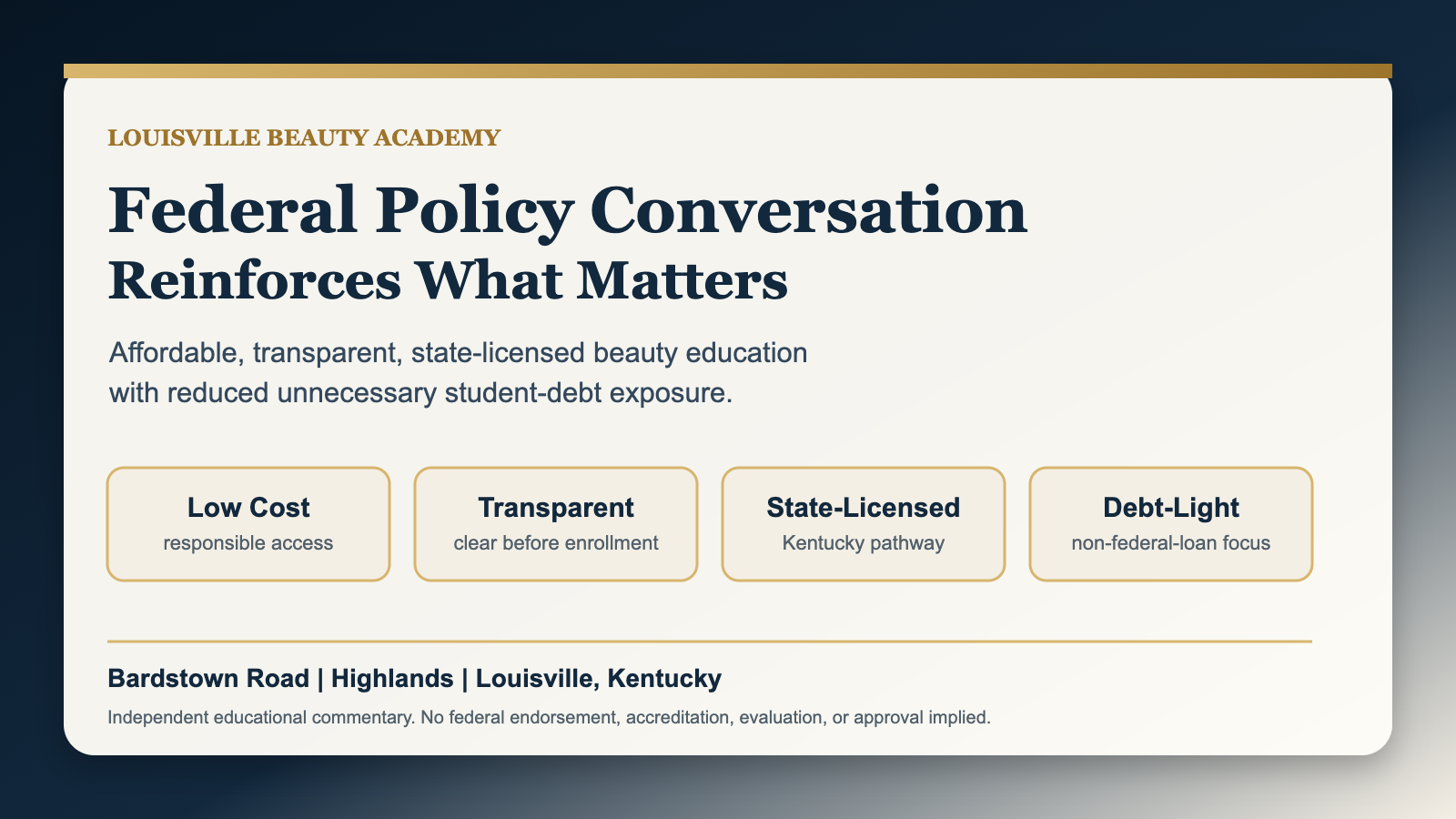
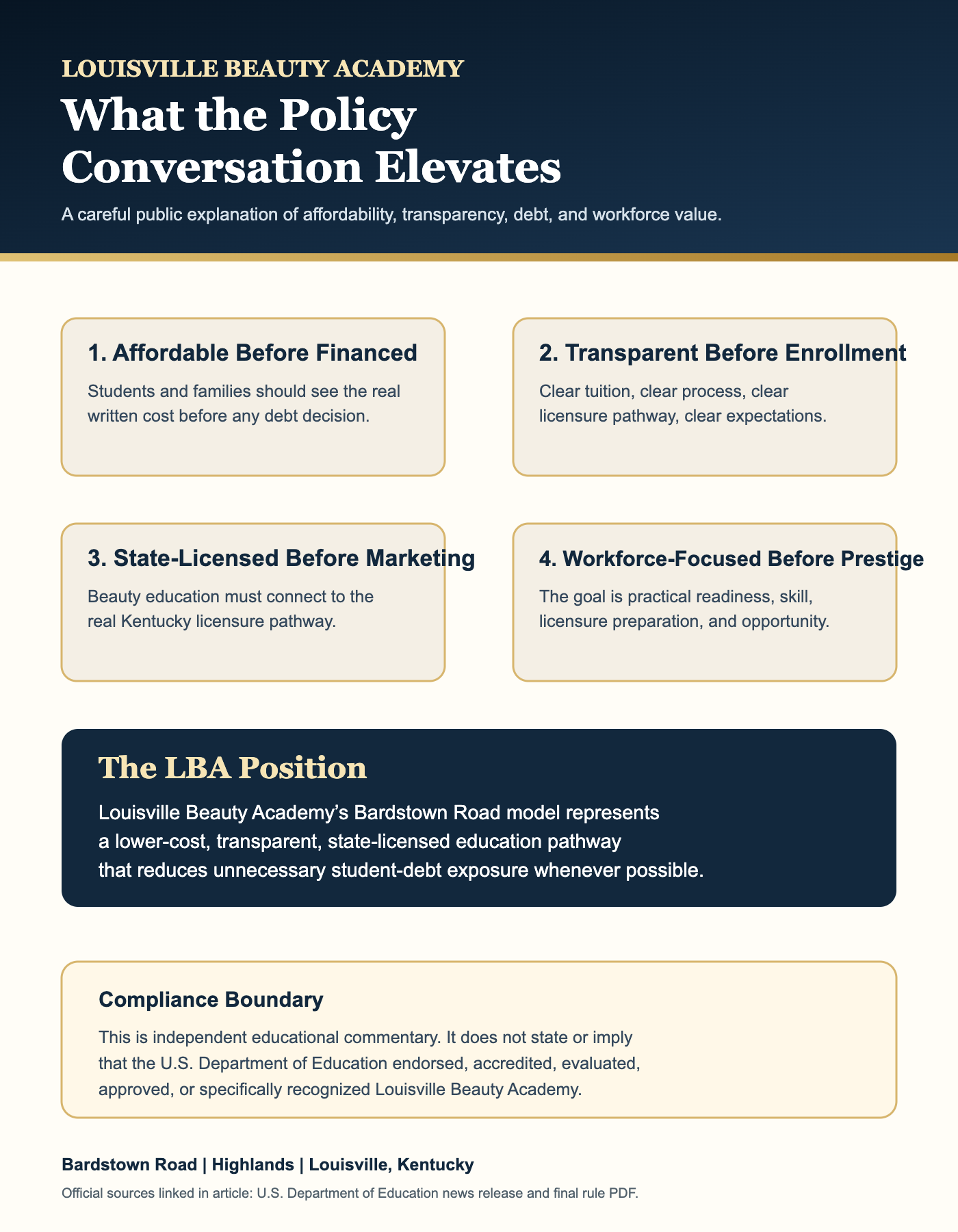
Louisville Beauty Academy has published a careful public perspective on why a state-licensed, lower-cost, non-federally dependent beauty education model belongs in this conversation. The position is student-first and legally narrow: LBA is not claiming federal endorsement, approval, accreditation, evaluation, or special recognition.
Instead, the article asks readers to consider a practical policy question: if a program helps students pursue licensure through transparent communication, lower cost, and reduced unnecessary student-loan exposure, those factors should be recognized as meaningful measures of educational value.
NABA shares this as a workforce and small-business education issue because accessible training pathways help students, families, employers, and local economies when they are communicated honestly and designed responsibly.
Read the full Louisville Beauty Academy article: Federal Policy Conversation Highlights the Growing Importance of Affordable, Transparent Beauty Education.
Important note: This post is independent policy commentary. It does not state or imply that the U.S. Department of Education has endorsed, accredited, evaluated, approved, or specifically recognized Louisville Beauty Academy.
Discover more from New American Business Association (NABA) - Louisville, KY
Subscribe to get the latest posts sent to your email.