
Before a Beauty Student Signs: A 10-Point Ethical Education Standard
Before a beauty student signs, the student should be able to see the truth clearly. What is the full cost? What conditions change the price? What does the law require? Who teaches and supervises? How is sanitation practiced? What records will follow the learner? What can the school document—and what can it not promise?
The New American Business Association, together with Di Tran University, is proposing a voluntary public-interest framework:
The Ethical Beauty Education Standard
Student First. Safety Always. Truth in Writing.
The goal is simple: help students, families, schools, salons, and small-business communities recognize education that is transparent, lawful, safe, evidence-based, and accountable. This is not a political campaign, a ranking, an accrediting body, or an attack on any institution.
The ten questions every student should be able to answer
- What exact program am I entering?
- What services could the resulting license lawfully cover?
- How many clock hours are required?
- What is the maximum foreseeable school-controlled cost?
- Which discounts or incentives are conditional, and how can they change or be lost?
- What additional exam, licensing, supply, transportation, or living costs may arise?
- What is a grant, what is a loan, and what must be repaid?
- Does finishing school create exam eligibility, or does it itself grant a license?
- What results can the school document—and what can it not guarantee?
- How can I review my records, complain, appeal, or seek correction?
A school should welcome these questions. Written clarity is not resistance to enrollment. It is respect for the learner.
Beauty Education is public-protection education
Beauty professionals work directly with skin, hair, nails, tools, chemicals, and shared surfaces. OSHA identifies chemical, ergonomic, and biological hazards in nail salons. The EPA states that cleaning must occur before disinfection and that disinfectants must be used according to label directions, including contact time. Kentucky’s infection-control rules exist to protect public health and safety.
Ethical education makes safety observable. Learners should practice how to clean before disinfecting, separate clean and contaminated items, control single-use materials, understand chemical hazards, respond to blood exposure, stop when a service is unsafe or outside lawful scope, and document correction.
Sanitation is not an accessory to beauty. It is a duty of care.
The ten commitments schools should make
- Truth before enrollment.
- Total-cost transparency.
- Law and scope literacy.
- Safety, sanitation, and public protection.
- Instructional integrity and licensed human authority.
- Records that follow the student.
- Honest outcomes and public claims.
- Access with dignity.
- Governed AI and technology.
- Complaint, appeal, proof, and repair.
Five are non-negotiable: lawful authority, safety, financial truth, claim integrity, and student dignity/repair. A school cannot compensate for a serious failure in one by performing well somewhere else.
Price clarity protects families and future businesses
The Federal Trade Commission advises vocational-school shoppers to compare total cost, supplies, completion, job placement, debt, contracts, cancellation terms, and whether the program supports the license or work they want.
An “affordable” claim should always answer: compared with what, on what date, full price or net price, what is included, and what conditions apply.
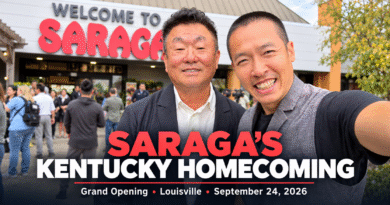
As a bounded Louisville example, Louisville Beauty Academy’s published cost page compared its own full listed prices with conditional prices. As reviewed on September 28, 2026, the examples were approximately 54% lower for nail technology, 57% lower for esthetics, and 77% lower for cosmetology. Each student’s signed agreement controls actual eligibility, conditions, inclusions, price, and payment terms.
That supports a dated comparison within LBA’s own pricing. It does not establish that LBA is nationally cheapest, that every student receives every reduction, or that another school’s grants could not create a lower net price. Ethical education states both the evidence and its limit.
Outcome numbers need denominators
“Hundreds passed” may count exam events rather than unique people. “Nearly all completed” means little without a defined cohort, dates, withdrawals, exclusions, and denominator. An economic-impact number may be an estimate rather than an independent audit.
The proposed standard requires consequential public claims to show dates, population, numerator, denominator, exclusions, source, unit, and whether the result is independently verified, school-reported, estimated, modeled, or proposed.
Unknown is acceptable. Hidden is not.
Licensure, accreditation, and federal aid are not synonyms
State licensure governs lawful operation under a state framework. Accreditation is a separate quality-assurance relationship. Federal recognition concerns an accrediting agency’s federal status and scope. Title IV eligibility requires more than state licensure and more than accreditation alone.
As checked on October 2, 2026, the U.S. Department of Education’s official database listed NACCAS as Active. NACIQI’s July 2026 recommendation against renewal was advisory; the Department describes the Senior Department Official as the decision-maker through the recognition-review process. Students and schools should follow the current controlling Department record instead of treating an advisory vote as a final decision.
Technology must have accountable people behind it
AI can help retrieve sources, compare versions, translate drafts, reconcile records, and support learning. It can also fabricate citations, expose private information, reproduce bias, or create false certainty. The voluntary NIST AI Risk Management Framework emphasizes validity, safety, security, accountability, transparency, explainability, privacy, and management of harmful bias.
In Beauty Education, AI must not replace licensed instruction, required supervision, regulator authority, legal judgment, final record certification, or human responsibility. The ethical operating claim is: AI-assisted, human-reviewed, accountable by design.
Why Louisville Beauty Academy is a useful case
The Kentucky Board of Cosmetology lists Louisville Beauty Academy as a licensed school offering multiple Beauty Education pathways. LBA’s public doctrine emphasizes law, sanitation, written clarity, license-first education, multilingual access, conditional lower-price pathways, and human-reviewed technology.
LBA is a 2025 U.S. Chamber CO—100 Enduring Businesses Honoree. Founder Di Tran was a 2025 NSBA Lew Shattuck award finalist, and a September 30, 2026 congressional certificate recognized LBA’s community service. These are recognitions—not accreditation, endorsement, or proof of educational outcomes.
LBA reports nearly 2,000 graduates, a school-reported figure repeated in a U.S. Chamber profile. Independent person-level reconciliation remains a future task. LBA is therefore presented as a prospective implementation case with evidence to contribute and evidence gaps to address—not as a predetermined winner or universal model.
A community standard that cannot be bought
NABA’s role is public-interest convening: bring together students, immigrant and New American families, small-business owners, salons, educators, safety practitioners, and workforce voices. DTU’s role is to steward Humanization, evidence methods, research architecture, and governed-AI guidance. LBA can test the framework in a real regulated environment. Independent reviewers must help govern and calibrate any future recognition process.
No donor, school, founder, or technology vendor should be able to buy a favorable score.
Use this standard before you sign
Students and families can bring the ten questions to any school. Educators can audit their own documents and claims. Salon and small-business leaders can ask whether graduates arrive with law, sanitation, client-care, and records literacy—not technical confidence alone.
Elite education is not defined by expense, exclusivity, fame, or technological spectacle. Elite means the price is clear, the law is taught, sanitation is practiced, records reconcile, outcomes have denominators, technology has accountable people behind it, complaints can be heard without retaliation, and mistakes lead to visible repair.
Student First. Safety Always. Truth in Writing.
Public-information note: This article proposes a voluntary public-interest framework. It is not legal advice, accreditation, government approval, a school ranking, or a promise of licensure, employment, income, or student outcomes. Current law, regulation, official agency guidance, school agreements, and individual circumstances control. Status-sensitive facts were reviewed on October 2, 2026.