
A Fair Beauty Education Standard: Transparent Finance, Clear Contracts, and Official Student Transcripts
Ethical Beauty Education Series: NABA policy companion. This article translates Louisville Beauty Academy’s student-first publication into a public-interest standard for beauty, barber, and licensure-based workforce education.
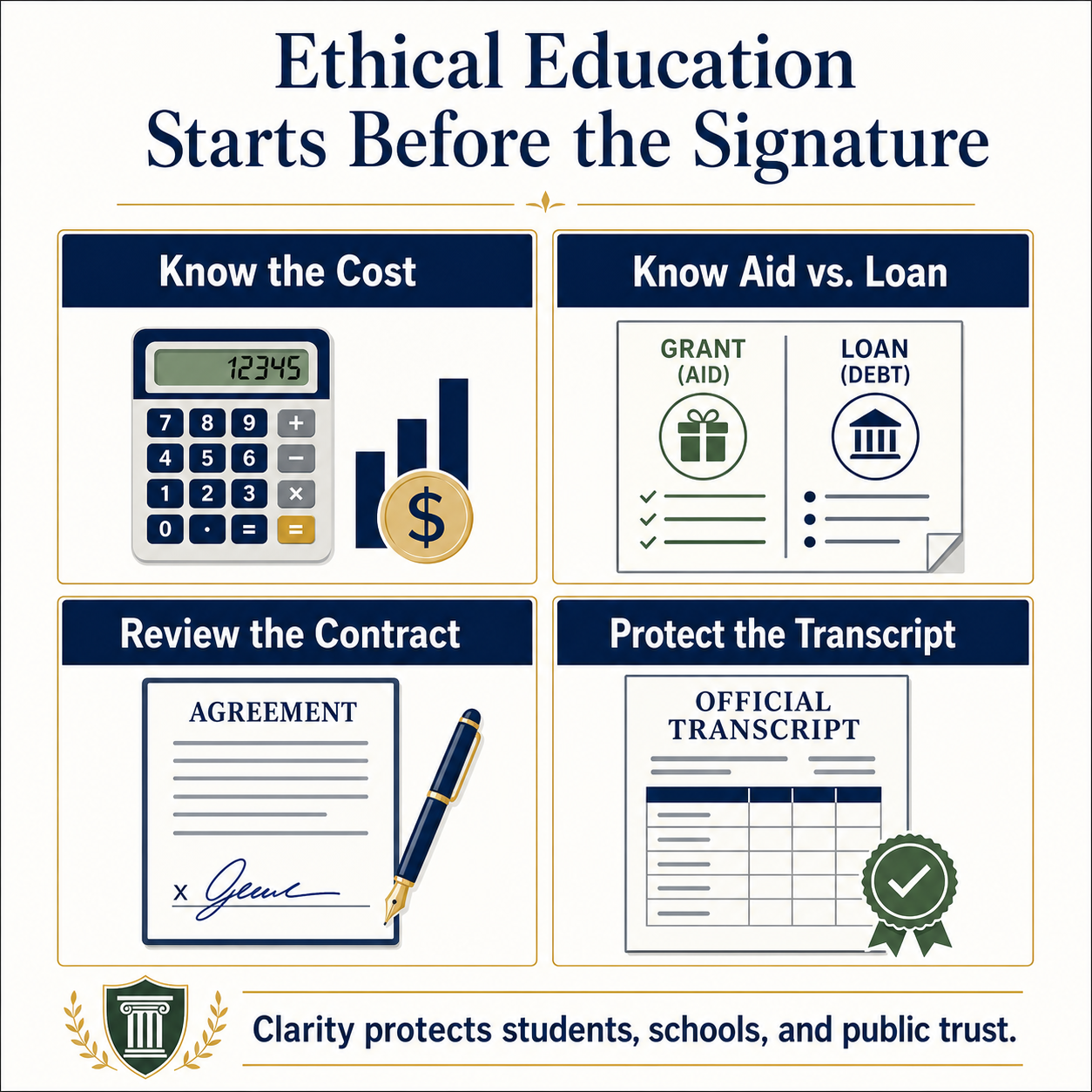
A fair beauty education system begins before the student signs. Cost, aid, loans, contracts, accreditation language, and official academic records should be clear enough for a student, family, counselor, workforce partner, and regulator to understand.
The public-interest standard
- Cost should be clear before signature.
- Aid, grants, payment plans, and loans should be separated in plain language.
- Accreditation, state licensure, and federal-aid participation should not be treated as the same concept.
- Standard enrollment terms should be understandable and reviewable before commitment.
- Every student should have a clear official academic record showing progress, completion, withdrawal, graduation, or transfer status.
- Beauty education should be presented as safety, sanitation, lawful training, technical skill, licensure readiness, and workforce preparation, not glamour-first selling.
Why NABA is speaking
The New American Business Association supports fair access, workforce dignity, immigrant and small-business advancement, and practical public education. Many future beauty professionals are working adults, parents, immigrants, second-career learners, or young adults making a major financial decision before professional income exists.
That is why clarity is protection. A student should understand tuition before enrollment, debt before borrowing, repayment before signing, and academic records before transfer or graduation.
Accreditation, federal aid, and student value are separate questions
Accreditation and federal-aid eligibility can matter, but they do not replace plain-language student understanding. Federal accountability now treats program-level debt, earnings, and financial value as questions students should be able to review. That public framework should strengthen clarity, not create fear or confusion.
This is not an attack on accredited schools, Title IV schools, or students who use lawful aid. It is a public standard: no label should hide the real cost, the repayment obligation, the academic record, or the licensure pathway.
The transcript is academic dignity
NABA supports the student transcript as the official academic record: the student-facing document of completed hours, accepted transfer hours, progress, completion, withdrawal, graduation, or transfer status. Contracts and financial records remain separate required documents, but the transcript should carry the academic truth.
A policy invitation
NABA invites schools, workforce partners, policymakers, families, and student advocates to support a simple standard: understand before signing, document before dispute, protect the transcript, and keep beauty education centered on safety, sanitation, lawful licensure, technical skill, and paid professional growth after graduation and licensure.
References and official sources
These sources are included for public review. Policy language is presented as an institutional and advocacy position, not legal advice.
- Louisville Beauty Academy flagship article
- Federal Student Aid: FAFSA can lead to grants, work-study, and loans
- Federal Student Aid: types of aid include grants, work-study, and loans
- Federal Student Aid: federal student loans and repayment responsibility
- Federal Student Aid: Master Promissory Note
- Federal Student Aid: repayment information
- FSA Partner Connect: Financial Value Transparency and Gainful Employment
- Federal Register: FVT/GE final regulations
- U.S. Department of Education: new earnings indicator on the FAFSA form
- Kentucky Board of Cosmetology: official site and mission
- Kentucky Board of Cosmetology: license requirements
- Kentucky.gov: Board of Cosmetology agency profile
- Federal Student Aid: choosing schools and checking accreditation
- College Scorecard data
- U.S. Department of Education 2026 earnings-accountability fact sheet