
A Public-Interest Standard for Accreditation, FAFSA, and Fair Beauty Education
NABA public-interest note. Accreditation, federal aid, student financing, state licensure, and workforce access should be explained in language families can understand before a student signs.
Louisville Beauty Academy has published a source-backed update about the July 2026 federal review of NACCAS, the reported NACIQI vote, and LBA’s December 10, 2025 public decision to separate from the NACCAS path.
The public-interest standard
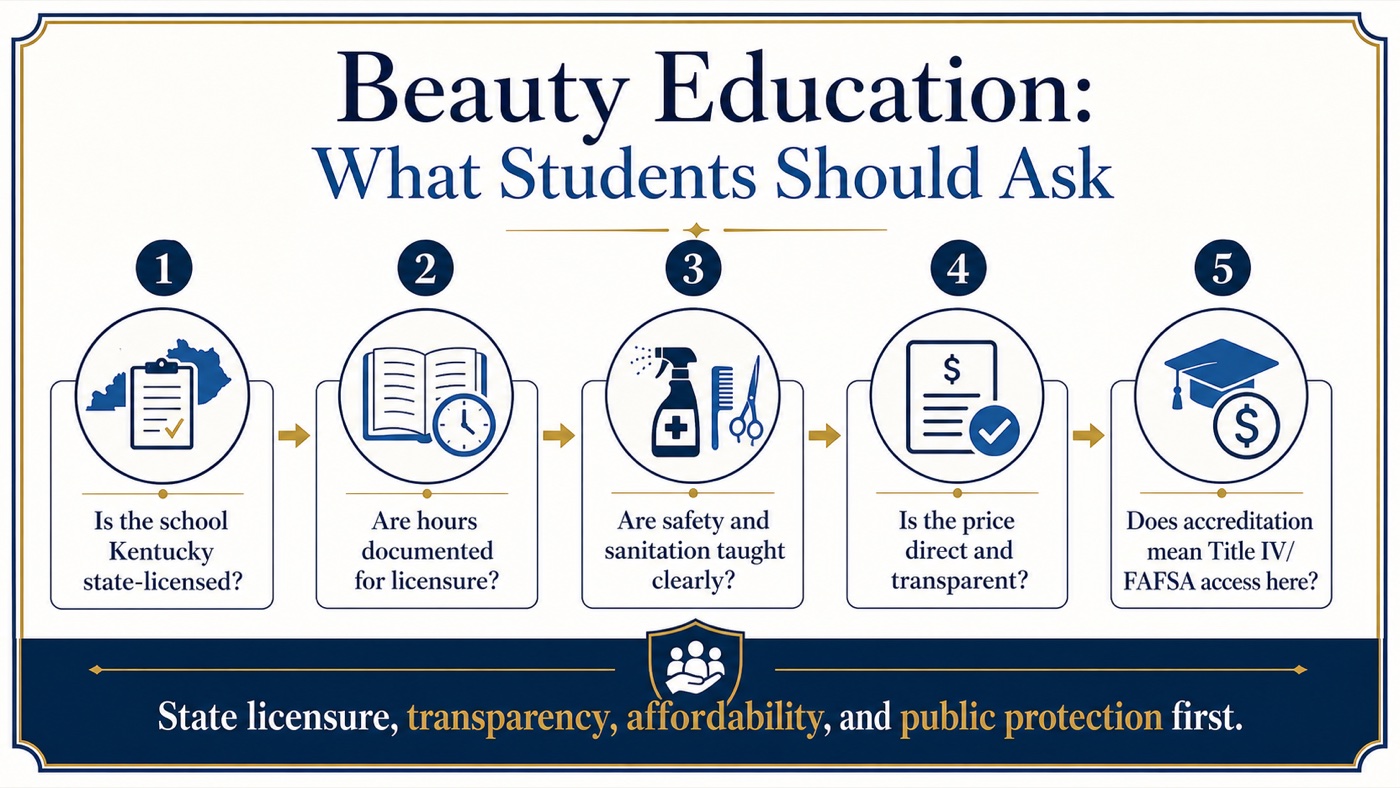
Students and families deserve clear separation between accreditation, Title IV/FAFSA access, state licensure, price, documented hours, safety, sanitation, and licensure readiness.
Why this matters for immigrant and working families
Many beauty students are working adults, parents, immigrants, first-generation learners, or second-career workers. Confusing prestige language can affect real financial decisions. Clear language protects choice, dignity, and workforce opportunity.
NABA supports public funding and accreditation systems when they are transparent, accountable, affordable, student-protective, and tied to real workforce value. This is not anti-public funding. It is a standard for honest public education.
The lesson
A school can be state licensed, affordable, compliant, student-centered, and transparent without using national accreditation as a federal-aid gateway. Accredited schools can also serve students well, but no label should substitute for clear price, clear pathway, documented training, and public protection.
Ethical education means the student understands the commitment before the signature.
Sources and Public Reference
- Louisville Beauty Academy canonical article
- U.S. Department of Education NACIQI Final Agenda, July 22-23, 2026
- Federal Register: National Advisory Committee on Institutional Quality and Integrity; Notice of Meeting
- U.S. Department of Education e-Recognition: NACCAS Final Staff Report
- Inside Higher Ed: NACIQI Recommends Denial of Recognition for Cosmetology Accreditor
- LBA December 10, 2025 public notice
- Kentucky 201 KAR 12:030 amendment record