Beauty Licenses, Part-Time Work, and Small-Business Reality
NABA positions beauty credentials as small-business infrastructure, not only employee-job preparation.
Read More
NABA positions beauty credentials as small-business infrastructure, not only employee-job preparation.
Read More
A NABA policy note using Louisville Beauty Academy’s U.S. Chamber CO-100 recognition as a careful Kentucky proof model for affordable, state-licensed workforce education, student choice, written accountability, and reduced red tape without weakening student protection.
Read More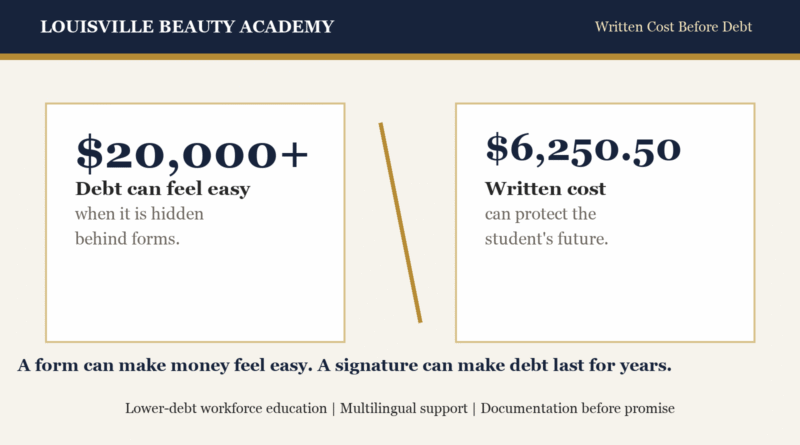
NABA’s policy framework for transparent cost comparison, lower-debt state-licensed education, and accountable student-choice funding.
Read More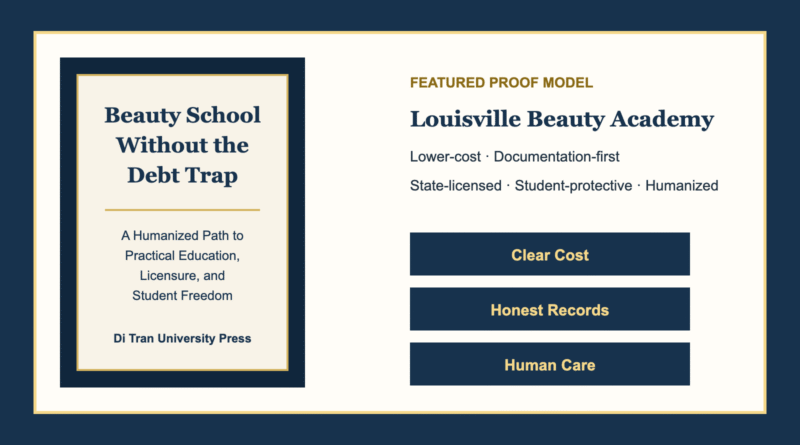
NABA frames Beauty School Without the Debt Trap as a policy question about accountable student choice, lower-cost licensed schools, workforce dignity, and practical education support.
Read More
License renewal systems are part of the public-interest infrastructure behind safe, lawful, and student-protective workforce education.
Read More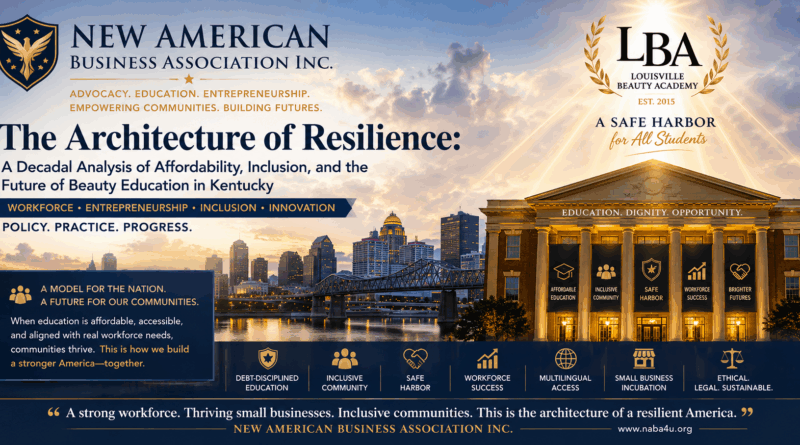
Positioning Louisville Beauty Academy as a Community-Anchored Solution During National Sector Correction The landscape of vocational education in the United
Read More
Executive summary The strongest policy-grade case is not that the federal government can simply re-label current beauty-school Pell eligibility as workforce aid
Read More
Executive summary The core policy claim is that beauty licensing is miscast when it is treated primarily as a higher-education
Read More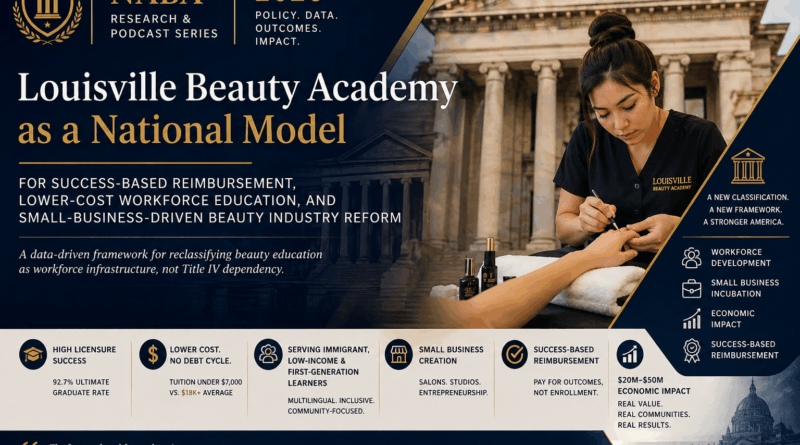
Policy & Research Disclaimer This publication is part of the New American Business Association (NABA) Research & Podcast Series 2026
Read More
Policy Framework Beauty Workforce Development as Small-Business Incubation A Policy Framework for Direct, Affordable, High-Value Human-Service Workforce Formation Executive Summary
Read More